
Most year-end gifting goes wrong at the brief, not at the product. A single line item called "Christmas gifts" gets approved, one order gets placed, and the same box goes to a twelve-year employee and to a client who signs your largest renewal in March. Those are two different jobs, and only one box can be right for both.
Splitting the brief costs nothing. Running them as one order is what causes the classic failures: staff gifts that feel corporate, or client gifts that feel like marketing.
They are answering different questions
- A staff gift answers: "was this year noticed?" It is about recognition, and it is judged on fairness as much as on value. Everyone compares.
- A client gift answers: "is this relationship worth keeping?" It is about standing out on a desk in a week when your client receives eleven other gifts.
Recognition and differentiation pull in opposite directions. Recognition wants consistency. Differentiation wants distinctiveness. One product rarely does both.
Branding: the rule reverses
This is the difference most companies miss.
- Staff gifts can carry your brand openly. Your team already works there. A branded jacket or bottle is a badge, and people use them.
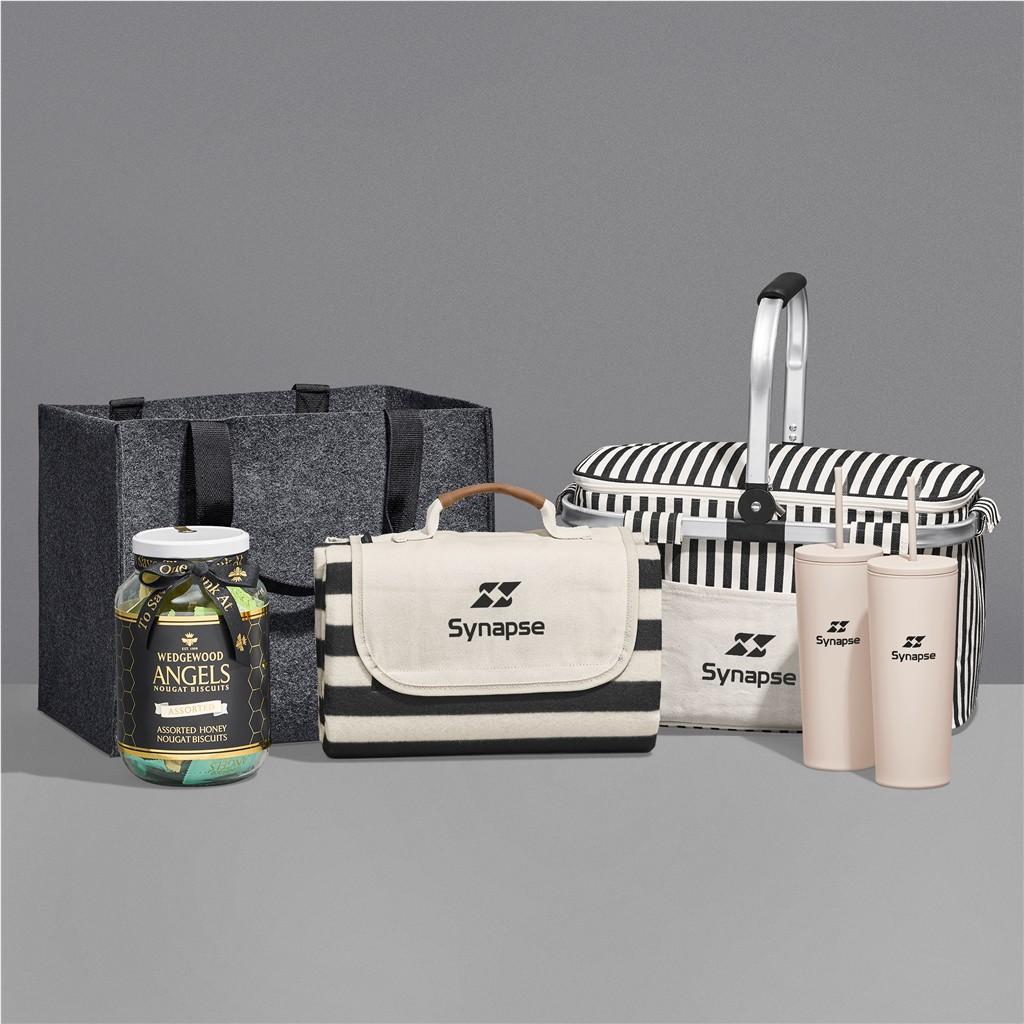
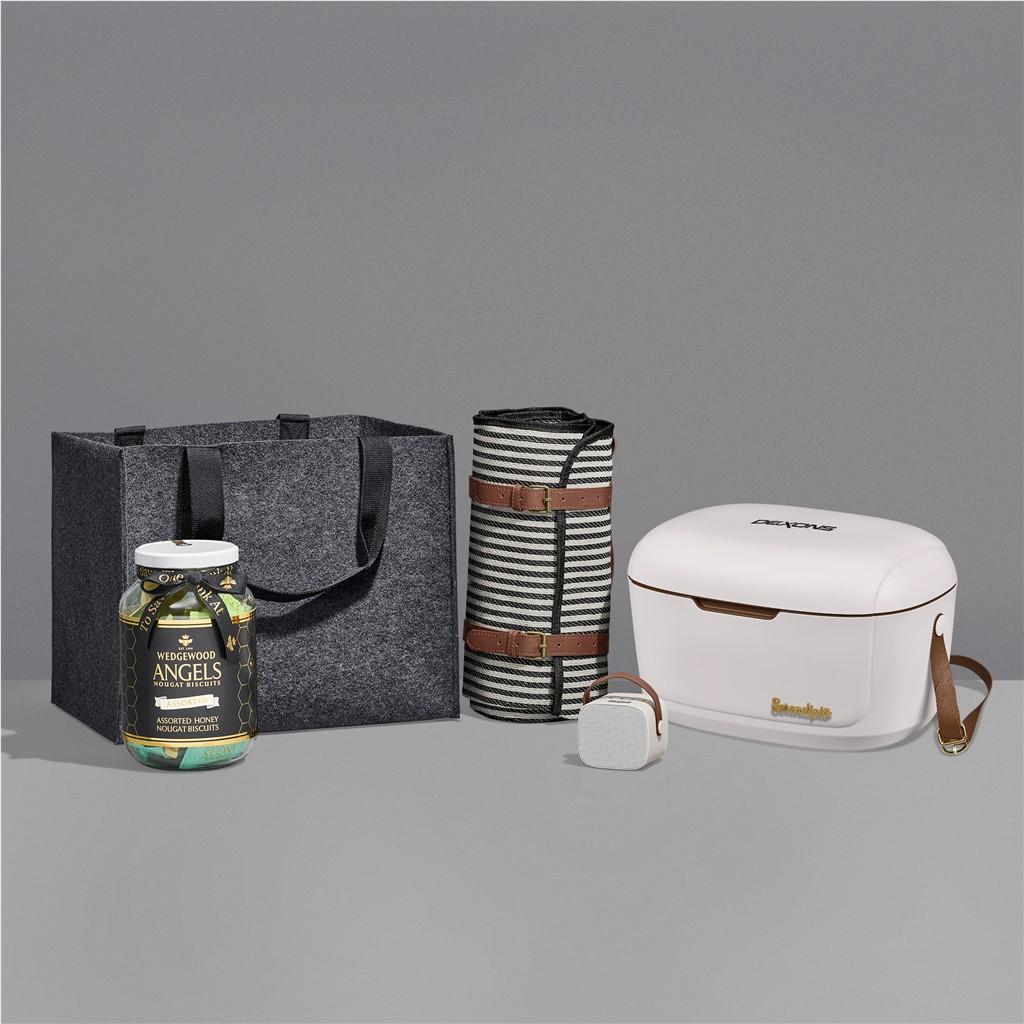
- Client gifts should be branded lightly. A branded ribbon, a printed sleeve, a message card, or one branded item inside an otherwise premium box. A box of logos reads as advertising and gets left in the office kitchen.
The test: if a client would be mildly embarrassed to have it on their desk in front of a competitor, it is too branded.
Budget behaves differently too
Typical South African ranges, per person:
- R75–R200 — the entry tier. Branded drinkware or a notebook-and-treat combination. The large-team option that still lands as a real gift.
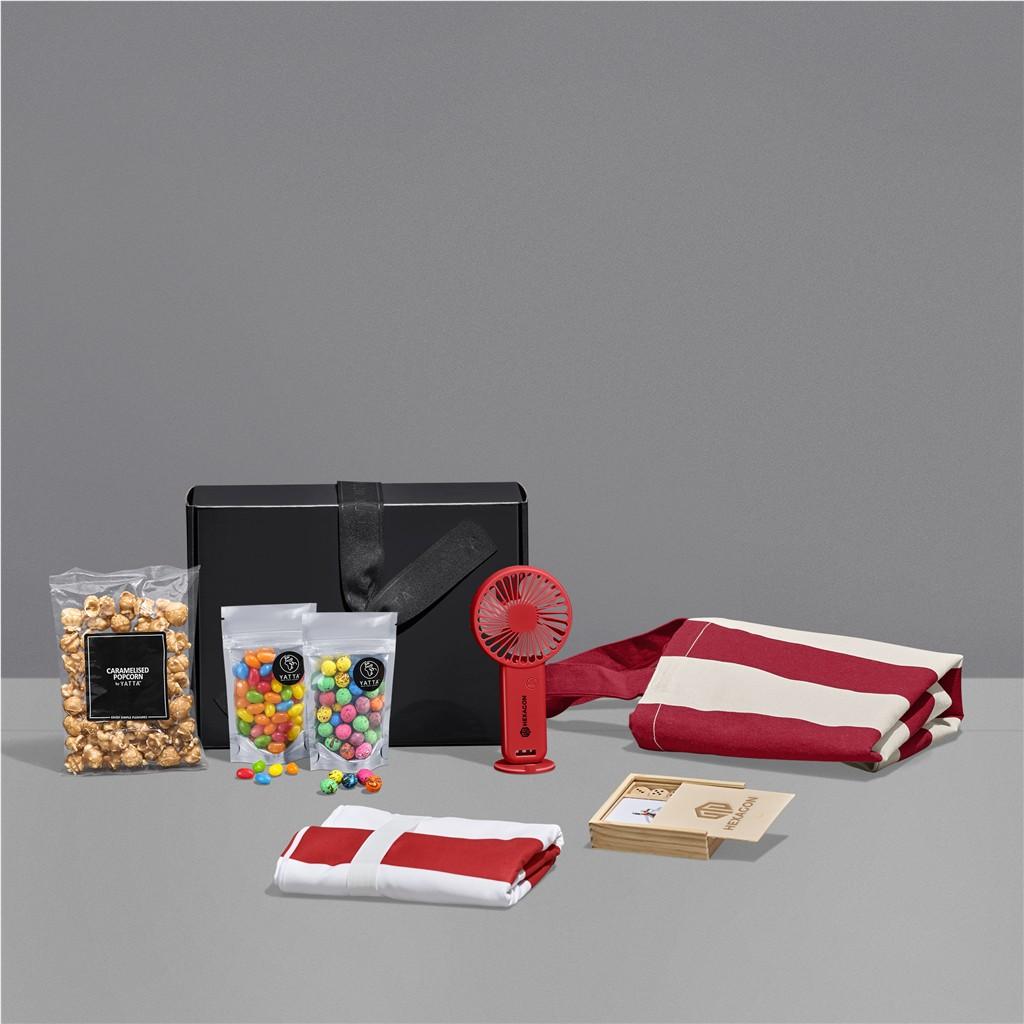
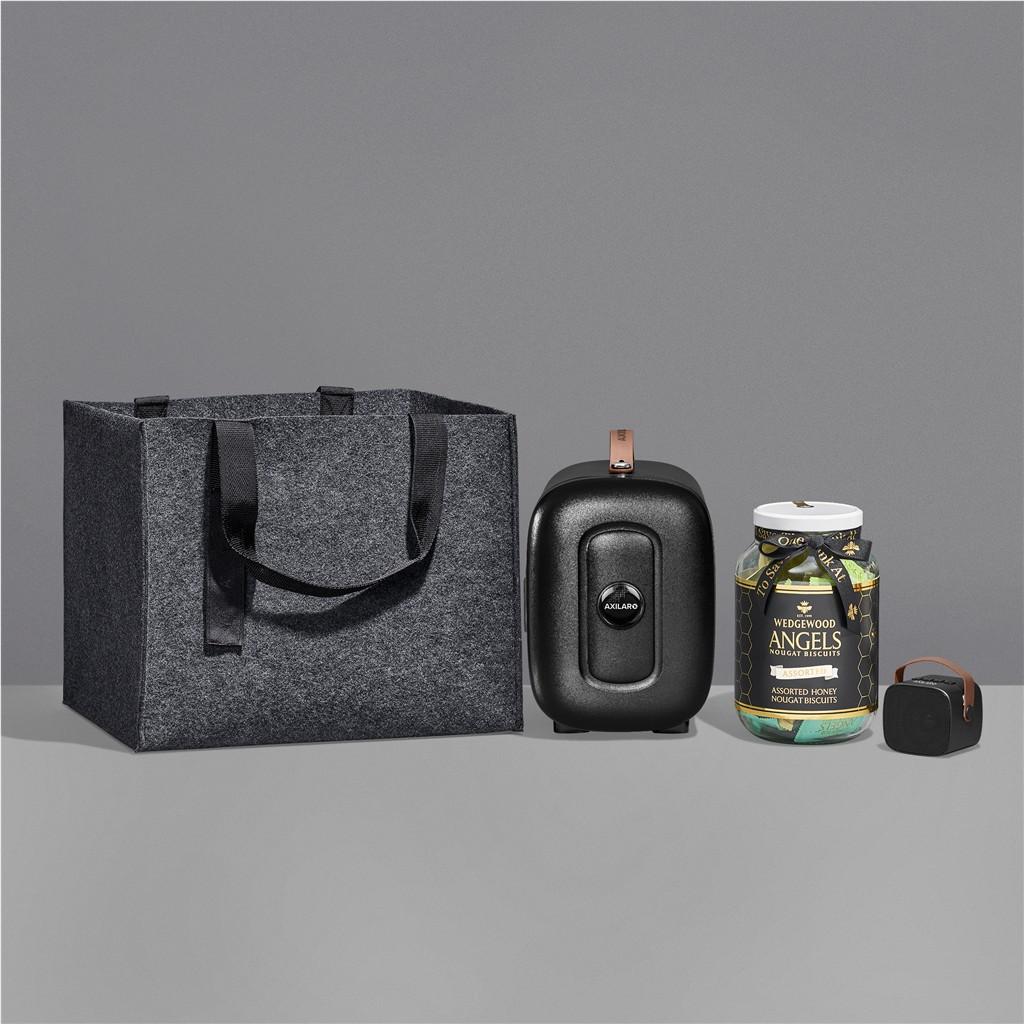
- R200–R500 — the company-wide standard for staff. A curated box: drinkware, something useful, good consumables, packed as a gift.
- R500–R1,200 — where most client gifting sits. Hampers and premium items in gift-grade packaging.
Staff budgets are usually flat across the company, and should be. Client budgets are usually tiered by account value, and that is fine — nobody is comparing.
Fairness is a staff-gift-only problem
Staff gifts get compared in a way client gifts never do. A few practical rules:
- Same gift across the team, or clearly separated tiers by a rule people already accept (length of service, for example) rather than by seniority alone.
- Remember remote staff and the people who are on leave. An undelivered gift is worse than no gift programme.
- Avoid sized items unless you can collect sizes properly. A jacket that does not fit is a recurring reminder.
Delivery is where the two diverge most
Staff gifts usually go to one address in one drop, timed to land before the office winds down. Client gifts often go to many addresses, on different dates, and sometimes need to arrive before a specific meeting. It is worth briefing both together and delivering them separately — one artwork approval, one quote, two delivery patterns.
Standard delivery runs 3–5 working days nationwide, with overnight available at a charge. Give the closure or arrival date and a good quote works backwards from it.
Running both without doubling the work
The efficient pattern is one brief containing two audiences:
- Headcount for staff, and account count for clients.
- A budget per head for each, not one blended number.
- One artwork approval covering both.
- Two packing and delivery specifications.
Because there is no minimum order quantity, the client tier can be ten hampers while the staff tier is four hundred boxes, in the same order.
The short version
Brief them as two audiences and one order. Brand the staff gift, under-brand the client gift, keep staff tiers flat and client tiers by value, and split delivery.
Staff gifting and client gifting are covered in more depth on their own pages, and year-end and corporate Christmas gifts has the budget tiers and December timing.
Enjoyed this article?
Subscribe to get the latest insights on branded merchandise and promotional products.